



































 Listen
Editorial Comments are provided by the writer in their personal capacity and without prior sight of journal content.
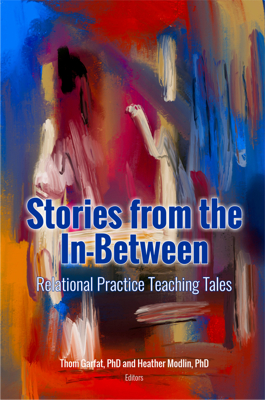
I just finished co-editing a book with Thom Garfat entitled Stories from the In-Between: Relational Practice Teaching Tales. Being involved in this process got me thinking about the prevalence and power of stories in our field and, more specifically, in shaping our growth and development.
In my career, which has spanned almost four decades, I have attended hundreds of conferences and training sessions, and have learned directly from the child and youth care greats – Mark Krueger, Lorraine Fox, Henry Maier, Jack Phelan, Gerry Fewster, Thom Garfat, Leon Fulcher, Larry Brendtro, Grant Charles, and many more. I have listened to experts on trauma, like Bruce Perry and Karen Purvis. I have spent countless hours talking to colleagues - international, local and within my own organization - about child and youth care practice. And here’s the thing – I remember hardly anything from any of those keynotes, workshop sessions or conversations, except the stories.
Neuroscience research has found that when we listen to descriptions of experiences with a sensory component our brains respond as if we were experiencing these events firsthand. The more vividly an experience is described, the more likely it is to be remembered. And, when we hear a story about something that resonates with us, that we can anchor to pre-existing schemas in our brain, the impact is even stronger. We are more likely to relate to and remember a story that we can put ourselves in. Given this, it is not a surprise that stories are so prevalent within the child and youth care field.
Child and youth care is a unique and unusual occupation. Most people in the “outside world” have no idea what we do or why we do it. How powerful it is to hear a story that we can relate to! Or to tell a story and know that the audience understands. And what interesting, provocative and emotionally-laden stories we have to tell – like the time two young people stole our vehicle and drove across town, only stopping after they crashed into the corner store; or the time a young person built a “bomb” in the bathroom, and then it blew up in his face and singed off his eyebrows; or the time the mom showed up at the group home at 4:00AM, demanding that we release her child from this “hellhole” immediately or she would have us arrested for kidnapping; or the time our 16 year old “tough guy” cried for an hour, in our arms, because he would never have a family; or the time Johnny said “thank you for caring for me even though I was a little shit when I moved in.”
A good story (and so many stories from the child and youth care field are good ones) can activate our senses, generate a connection with the storyteller, trigger an emotional response, and stick with us long after it has been told. A good story can also teach, entertain, provided much-needed stress release, and help us to feel less alone.
We tell stories to debrief after a stressful shift, to elicit empathy when we are overwhelmed, to honour resilience and achievement, and to relay the sheer absurdity (and beauty) of the things we see and do. Stories bring experiences to life in ways that rote facts cannot.


