































South Africa has high incidences of child abuse, and understanding which elements contribute to abuse can serve as intervention methods to break the intergenerational abuse cycle is therefore vital. Child and Youth Care (CYC) workers possess a unique approach to working with children and families. Practitioners position themselves in the daily life space of children and families allowing them to intervene proactively, responsively and immediately. The study evaluated four parenting programmes from a CYC perspective, investigating the impact the programmes have on stemming the intergenerational transfer of physical and emotional abuse. The study followed a mixed-method approach consisting of 20 semi structured open-ended questions and a questionnaire consisting of 21 questions measured on a 5-point Likert scale. The participants were selected from one of four identified parenting programmes with a total of 12 participants, three from each programme. Key themes identified from the collected data were parenting style, parenting skills, discipline tools, punishment, child abuse and parental perception. The findings, which were also triangulated with previous studies, showed that all participants experienced a positive change in discipline techniques, a change in parenting style, displayed greater competency interacting with children, parents acquired new parenting skills and a feeling of empowerment. Overall, the research ascertained that parenting programmes could play a role in breaking family abuse cycles. This article explores why and how Child and Youth Care Practitioners (CYCPs) can incorporate parental education as a tool for practical prevention and early intervention, in order to stem family abuse cycles.
Keywords
Child abuse, abuse cycle, parenting programmes, child and youth care
Introduction
South Africa has high incidences of child abuse (Meinck, Cluver, Boyes & Ndhlovu, 2013); however, there is a lack of accurate statistical data on virtually all forms of violence against children due to the unwillingness and hesitation of victims to report abuse. Domestic violence transcends all cultural spheres and affects families from a wide range of socio-economic backgrounds (Kubeka, 2012). Parent-child relationships form the foundation of how children perceive the world around them and influence their future capacity for relationships. When parents display sensitive, responsive and predictable care, young children develop the skills needed to succeed in life (Conger, Schofield, Neppl, & Merrick, 2013, p. [S]12). Early parent-child relationships have powerful effects on children’s emotional well-being (Dawson & Ashman, 2000), while abuse negatively affects a child’s physical, mental, sexual and social functioning (Chen and Chan, 2016, p. 88). The daily interaction between children and parents enables a child’s emotional, physical and intellectual development. Parent-child relationships can serve as a risk factor for child abuse; whereby poor relationships increase the pervasiveness of child abuse in a home (Chen & Chan, 2016, p.89).
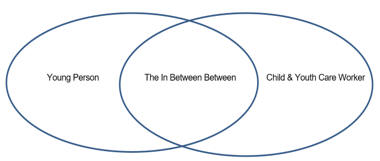
According to Fulcher and Moran (2013, p.79) “relational care requires that one directs attention towards what is happening between a child or young person and his or her carer(s)”. The authors note the perspectives of other authors like Garfat, Bellefuelle and Jamieson who state that relational care involves the co-created space between the child and the carer, and that relational practice is a “dynamic, rich, flexible, and continually evolving process of co-constructed inquiry where meaning emerges with the space between the individual, family, or community” (Fulcher & Moran, 2013, p. 79). Relational care is therefore more than having a relationship and includes working towards this co-created reality that is more than patterns of cause and effect (Fulcher & Moran, 2013). In South Africa, the Child and Youth Care Practitioner (CYCP) often cares for the young person where the parental relationship may not be intact. In residential care only a child who was found in need of care under the provisions of the Child Care Act and Children’s court proceedings, can be under the care of Child Care Centres. Within this context, parenting programmes are not often considered as part of interventions in the child’s life space and this paper makes a link between the role of parenting programmes in interrupting the abuse cycle, what are seen as successful factors from parenting programmes, and what the CYCP’s role is in this process.
It is common to consider the whole family as the recipients of the services of CYC. Maier (1988, p. 205) stated, “working with parents requires full knowledge of the parent’s situation, the parents interaction patterns with the child” he further proposed that “the parents, in such instances, would become clients in their own right and the intervening efforts would be geared towards their own personal requirements.” Thus parents may be considered as partners in the treatment of children and young people (Garfat, 2007).
“Professional practitioners [CYC workers] promote optimal development of children, youth and families in a variety of settings such as early child care and education, community-based child and youth development programmes, parent education and family support” (Ferguson, Pence & Denholm, 2002, p.12)
As a context to this study, a theoretical framework developed from literature on the context of CYC practice in South Africa and the theories linked to abuse and parenting programmes, is provided first.
Abuse Cycle Theoretical Framework Interaction Model
The study reported in this article devised an abuse cycle theoretical framework interaction model (ACTFIM) to illustrate the interaction between social learning theory, trauma theory and the ecological model of development. These all work in conjunction portraying the family abuse cycle. The parent-child relationship is a crucial influence in a child’s life, which can be a protective factor and risk factor for either abuse prevention or exacerbation (Herrenkohl, Klika, Brown, Herrenkohl, & Leeb, 2013). Integrating all three theoretical perspectives lends itself more to a CYC approach as it takes into consideration the various elements that negatively affect a child. The ACTFIM depict the four intervention levels prescribed in the South African Minimum Standards of Child and Youth Care Policy (Minister for Welfare and Population Development, 1998) which CYCPs adhere to; the model proposes effective intervention to take place in Level 1 (preventative level) and level 2 (early intervention). Of importance to note is that these minimum standards were derived from the Inter-Ministerial Committee on Children and Youth at Risk, which was tasked to transform the welfare system during 1996-1999.
Figure 1. Abuse Cycle Theoretical Framework Interaction Model (ACTFIM)
Family abuse happens within the microsystem of the ecological model. When a child experiences abuse it causes trauma (trauma theory) and parents exposing children to physical and emotional abuse become the model which will later serve as an example of behaviour for children to imitate (social learning theory). The literature identifies vulnerable families and people who have experienced abuse as having a higher predisposition to mirror the abusive behaviours and parenting styles they are familiar with (Hope & Van der Merwe, 2013; Kubeka, 2012; Meinck et al., 2013). It is not possible to look at the family abuse cycle without investigating the various elements that contribute to the cycle of maltreatment. Child abuse prevention should focus on eliminating the earliest signs of child maltreatment to stem long-term negative effects. Parenting programmes offer opportunities for addressing risk factors for child maltreatment by eliminating abusive behaviour towards children, thus, breaking intergenerational abuse cycles. Sanders (2008, p. 507) encouraged parenting programmes to focus on multiple social systems influencing parenting; such as mass media, primary health care services, child care, school systems, religious organisations and the broader political systems, thus, highlighting the need for all the systems of the Ecological Model to act in cohesion. Maier (1988) postulated that child and youth care practitioners either focuses on the primary system, which is working directly with a child or focuses on the auxiliary system. The author further noted that “in the case of the auxiliary system, the professional works with key adults who are instrumental in a child’s life” (Maier, 1988, p. 205). The ultimate objective between parents and the CYC worker is to create a supportive relationship and foster skills development.
All parts of the ACTFIM cannot be described in this article and while much can be contributed on the modelling of parent behaviour that occurs through social learning, and how this compares to relational practice, the focus of the article will be on the role CYCPs have in the disruption of the abuse cycle through the use of parenting programmes as an intervention.
Factors in Child Abuse Intervention
Child Maltreatment or abuse is defined as all acts of potential or actual harm or ill-treatment deliberately inflicted on a child or exposing a child to such acts; thus, leading to psychological, developmental or emotional impairment (Pretorius, Mbokazi, Hlaise & Jacklin, 2012). Five factors that play a role in child abuse intervention were identified through the literature study and will only be listed here briefly (Thornberry, Henry, Smith, Ireland, Greenman & Lee, 2013, Jaffee et al., 2013, DuMont, Widom & Czaja, 2007, Brendtro & Larson, 2006, Nixon & Halpenny, 2010, Ritchie & Buchanan, 2010, Lundahl, Nimer & Parsons 2006, The Women's World Summit Foundation, 2011):
Apart from the above factors suggesting that parent programmes serve as an intervention on preventative and early intervention levels (minimum standards of CYC), they also supports its value in altering parents’ ideas regarding corporal punishment by teaching positive alternative discipline techniques (Cluver et al., 2016; Lundahl, Nimer & Parsons 2006). Ingram et al. (2013) confirmed that parenting programmes assisted in parental stress reduction and increase in well-being of children. It will therefore be critical that a parenting programme demonstrates focus on the five factors, and thereby considers the ecological and social learning context and influence within inter-generational abuse cycles.
Fulcher (cited in Garfat, 2007) noted that with the evolution of the profession of CYC there is a focus on increased family participation leading to improved outcomes for children. CYC workers are concerned with the quality of the interactions between parents and children; CYCPs developed into a facilitator and educative role in families promoting parenting skills, youth development and knowledge in child-raising (Garfat, 2007). The National Parenting Education Network (Npen.org, 2017) defined parent education as “a process that involves the expansion of insights, understanding and attitudes and the acquisition of knowledge and skills about the development of both parents and their children and the relationship between them.” We are therefore to reflectively evaluate the role of CYCPs in parenting programmes as a means to break intergenerational cycles of violence against children. With Social Workers being tasked with the reunification of families, after a breakdown, one might argue that the main drive behind the Inter-Ministerial Committees’ transformation of the welfare system means that more CYCPs had to move into the preventative space where families are protected from breakdown.
The Child and Youth Care Practitioner’s Role in Working with Parents
Garfat and Fulcher (2012, p. 5) state that “Child and Youth Care workers are ideally situated to be among the most influential of healers and helpers in a person or family’s life.” Child and youth care practitioners possess a specific and unique skill set and approach when working with children and families, intervening proactively and responsively to help children and family members learn new ways of behaving and interacting in the world (Garfat, 2003; Garfat & Fulcher, 2012, p. 6). Child and youth care practitioners work with families and children to provide services such as support, education or counselling (Modlin, 2013:175). The role of the CYCP in parent education is to support and assist parents to better understand and respond to the needs of their children. Garfat reflects on how far CYC has come, as follows:
“We talked about how it was the parents who should be in care, how if they would just change, everything would be okay. We became, in essence, parent blamers, joining the ranks of those who laid responsibility for the problems of the child, squarely at the feet of one parent or the other… We ignored relationship, except to use it as a tool for measuring how well we were doing with the young people. We did things ‘to’ families, especially parents, not ‘with’ them. Eventually, we got past this attitude … And now, we can say, finally, that we have developed a child and youth care approach to working with families that applies characteristics of a general child and youth care approach to family connection, engagement and relational work in residential care” – (Fulcher & Garfat, 2015, p.33).
The study aimed to put a CYC lens on parenting programmes; examine while theories on trauma, abuse and parenting skills will be at the forefront, relational aspects emerge as some of the success factors in existing parenting programmes in South Africa? In part, the initial premise of this exploration was that it is evident that parenting programmes can improve the well-being of children and family relationships (Sanders, 2008, p.506). Garfat (in Fulcher & Garfat, 2015) reiterates that a direct relationship allows CYCPs to work in the family’s world and when they work where the family lives they are able to make direct observations and helps in real time. From the study the parents’ views on the impact and reasons of success of the parenting programmes were obtained and the involvement in the life space was one of the analytic lenses applied. We asked especially whether such involvement can be preventative when it comes to child maltreatment.
Research Method
The study used a mixed method design based on individual semi-structured interviews and a designed Likert scale, with convenience and purposive sampling. Apart from demographic information, the semi-structured interview questions focused on the type of discipline methods the parents experienced when they were growing up and whether they used similar methods as to what they experienced or why they utilised different discipline techniques. It explored their parenting styles and believes about effective parenting and the changes they experienced as a result of the parenting programme. The Likert scale served as a quantified verification of the qualitative data and focused on the same areas. Twelve parents who participated in a parenting programme in South Africa agreed to be part of the study, with three participants per programme from four parenting programmes recruited. Two of the participants were male, 6 Afrikaans and 6 English speaking, with a range of education levels (from a high school graduate to a person with a doctorate degree, with half of the participants having a post graduate qualification). While there was a relatively good age distribution, with the majority between 36 and 41 years old, those willing to participate were not representative of the diverse cultures or socio-economic statuses in South Africa.
A brief description of the parenting programmes whose participants were respondents in the study is provided in Table 1 with a short statement on what differentiates them. While the majority of programmes focused on skills training, it is indicated where the programmes were evidence-based or researched-informed.
Table 1: Description of parenting programmes
| Parenting Programme | Description |
|
Evergreen Parenting (Evergreen Parenting, 2017) |
A Christian based programme that focuses on parenting as a disciplined process, emphasising each family member’s unique temperament and personality type, parenting style, a child’s developmental phases, discipline techniques, rhythm and routine of a family. Facilitators are trained and monitored to offer a pre-designed curriculum with products. |
| Natalee Holmes Conscious Parenting (Natalee Holmes, 2017) | Parents are given easy to learn, positive parenting techniques that allow them to redirect their children’s behaviour through loving guidance rather than punishments and threats. Parents and caregivers learn how to use practical discipline tools to create cooperation, build self-esteem, and strengthen relationships from birth to adulthood. |
| Parent Effectiveness Training (P.E.T) (Parents Effectiveness Training, 2017) | Teaches parents communication skills to interact with their children. Practical communication skills will allow children to feel free to discuss any problems or concerns, learn self-discipline, self-control and an inner sense of personal responsibility. Families are taught how to work together instead of against each other. All family members participate in setting the house rules to create an atmosphere of inclusion. The evidence-based programme focuses on conflict resolution and promotes problem-solving skills. |
| Smart Choice Parenting (Smart Choice Parenting, 2017) | Is a research-based program which focuses on helping children become independent and allowing parents to evaluate how various parenting styles can benefit or harm children. The purpose of the programme is to teach parents that their role is to be a guiding hand assisting children into becoming morally responsible and independent adults. The programme follows a common-sense approach, based on an educative role of the parent, guiding a child to adulthood. The programme builds on parental skills to cope with real-life problems and tools how to handle challenging behaviour. In addition, topics such as effective communication that is firm but not harsh, behavioural disorders, addressing ineffective parenting styles and a child's’ developmental phases and needs. Furthermore, the programme encourages children to take responsibility, inspires a problem-solving focus while building confidence |
The study did not include a pre- and post-test and a longitudinal study would better assess the impact of the programmes on parental skills, attitudes, parenting style and discipline methods.
Data Collection and Analysis
The mixed-methods study evaluated how parenting programmes influenced parental attitudes towards parenting and which skills acquired after completing a parenting programme were found to be most valuable. The purpose of looking at the parents’ perspective was to determine if parenting programmes might be useful as a preventative or early intervention method in breaking the cycle of abuse and to investigate whether these types of programs fit within a child and youth care practice framework. The semi-structured interviews consisted of 20 open-ended interview questions followed by a 5-point Likert scale questionnaire consisting of 21 statements that explored parental perceptions after the completion of the semi-structured interview questions.
Data analysis involved the sorting through data, organising it and selecting appropriate information about the study (Du Plooy-Cilliers, Davis & Bezuidenhout, 2014). A side-by-side (convergent) comparison approach (Creswell, 2014, p. 222) was used for the data interpretation. The raw quantitative data was imported into the IBM SPSS 20 software programme for statistical analysis and textual analysis (Braun & Clarke, 2006) was conducted by using Voice Base API analytical software which assists in identifying keywords within the transcripts (Voicebase, 2017). All categories and themes were developed from the raw data and not predetermined. The following themes emerged after conducting the qualitative data analysis (Table 3).
Findings
Six key themes emerged after analysis of the qualitative and quantitative data as presented in Table 2 below. The qualitative data was analysed using a VoiceBased API analytical software which initially generated topics or codes by extracting relevant keywords, followed by redacting the codes into the themes. Each theme is shortly discussed, with the triangulated literature support found in support of the findings.
Table 2: Qualitative Data Analysis Themes
| KEY WORDS | THEMES | |||||
| Parenting Style | Parenting Skills | Discipline Tools | Punishment | Child Abuse | Parental Perception | |
| Autocratic | Boundaries | Consequences | Control | Emotional abuse | Abuse prevention | |
| Authoritative | Communication Learning curve |
Discussions | Bad behaviour | Mental abuse | Parenting programme | |
| Culture | Middle ground | Negotiate | Obedience | Physical abuse | Family support | |
| Democratic | Mind shift | Privileges | Physical discipline | Parenting skills | ||
| Permissive | Personality | Responsibility | Wooden spoon | |||
| Strict | Quality time Relationship Understand Wasn’t working |
Reward chart | ||||
Parenting styles are associated with different combinations of support, warmth, supervision limit setting or boundaries for children (O'Connor, 2002; Nixon & Halpenny, 2010). Robertson (2001) noted that permissive parenting tends to emphasise warmth but neglects the setting of boundaries and supervision, while authoritarian styles emphasise boundaries and supervision but negates warmth. Authoritative parents on the other hand, are warm and responsive within the parent-child relationship, with set standards, open communication, and their children being cognisant of what is expected of them and with positive developmental outcomes (Nixon & Halpenny, 2010, O’Connor, 2002).
Four respondents acknowledged that they do at times have an overly permissive parenting style, while one indicated that some negative behaviour has reverted, but this could be due to participants needing to work on consistency. The quantitative data indicated that 83% of parents ‘strongly agreed’ that the parenting programme improved their relationship with their children and 17% ‘somewhat agreed’ with the statement. Five respondents indicated that their parenting styles changed after completing a parenting programme, among others, to put more boundaries in place for their children; to discover win-win solutions; and feeling more empowered than just replicating their own parents’s styles. Having a focus on having fair solutions that benefit the parent and the child already shows a focus on more relational aspects. Participants further declared that culture and religion influences parenting style and ideas about what is acceptable in parenting.
Theme 2: Parenting Skill
Parenting skills allow parents to shape a child's behaviour effectively. Effective parenting skills include, but are not limited to, developing clear expectations of children, setting boundaries, consistently following through with consequences, having the ability to remain calm and be a positive role model (Heffner, 2004). 25% of participants ‘strongly agreed’ and 67% ‘somewhat agreed’ that they have problems managing their children's behaviour. The data further showed that when parents were asked if they lose their temper when their children do not do something they were asked, 15% of participants ‘strongly agreed’ and 77% ‘somewhat agreed’ with the statement. Furthermore, 75% of parents ‘strongly agreed’ that parenting programmes should be mandatory for all parents. Participants overall found the following parenting skills provided a positive influence and impact on the parent-child relationship: firm boundaries, communication, understanding a child’s personality, quality time, children knowing the consequences to their actions, allowing for parental self-care and acknowledging your child. Sentiments of participants again supported relational aspects like communication, being aware of their own anger, and acknowledgement of the other as important.
Theme 3: Discipline Tools
Discipline is the process of teaching children what behaviour is acceptable. The literature review identified inconsistent discipline as a risk factor for child abuse (Meinck et al., 2013). Effective discipline uses a plethora of tools, customised to each child to meet their individual developmental needs. Literature identified a link between discipline methods and parenting style. Authoritative parents have clear expectations of children allowing flexibility and collaboration between parents and children, fostering a positive parent-child relationship (Nixon & Halpenny, 2010). Authoritarian parents have clear expectations of their children and stringent consequences for defiance (O’Connor, 2002). Permissive parents show children great affection; however, they also show a reluctance to implement discipline and structure. In this study, 50% of participants ‘strongly agreed’ that children learn respect through strict discipline and 92% found that participating in a parenting programme helped them understand their children better. Parents overall identified that consistency in discipline, removing privileges, teaching children natural consequences to actions, fostering a sense of responsibility, creating an environment for open discussions, timeout and allowing room for negotiation assist in effective discipline.
Half the respondents mentioned they made use of similar discipline methods to what they experienced growing up; however, attending a parenting programme resulted in a few noteworthy changes. One respondent stated, “I am more intentional with telling them ‘this is why I am punishing you.’ Another participant stated that the programme brought greater awareness “before you react, you should pause and think ‘am I reacting because of who I am or because of what they did.’” Two parents did find that they emulated the discipline methods they were exposed to, but it was negative. Participants overall agreed that to maintain a discipline plan is to create an inclusive plan with input from children, treat your child with respect, communicate what actions will receive specific ‘punishments’ and strive for consistency. It is evident that parenting programmes facilitate significant self-reflection by the parent in their own behaviour that influences the behaviour of children.
Theme 4: Punishment
Punishment tends to have a negative connotation, where caregivers use a painful or unpleasant method to stop a specific behaviour (Telep, 2009). Punishment forms part of dysfunctional parenting tendencies (MacMillan et al., 2007). The quantitative data revealed that 50% of parents did not think that slapping or spanking is an effective method of discipline. Also, 42% of participants did not find using harsh words, raising their voice, scolding or yelling to be an effective form of discipline. Ten out of the twelve participants experienced physical discipline growing up, while one grew up in a home where “it was very much ‘my way or the highway’, it was fear orientated, and I was afraid”, This experience led to under disciplining their children and the parenting programme taught them how to be more strict. Participants tended to utilise similar discipline strategies they experienced even if it was negative, but one found that they shy away from harsh discipline “I think I went completely the opposite way because I came out of an exceptionally strict home”, while another admitted that they would use a hiding (spanking) because they could not control the situation and their assertion did not change behaviour.
Theme 5: Child Abuse
Wilkinson (1998, p. 120) argued that “physical abuse appears to be disclosed more readily; emotional abuse is much harder to define and detect, particularly retrospectively”. Participants provided definitions for physical and emotional abuse; overall participants found defining physical abuse a lot easier than emotional abuse. However, there is a grey area where a person crosses a line between discipline and punishment. The qualitative data showed that 8% of participants ‘strongly agreed’ and 25% ‘somewhat agreed’ that they grew up in a physically abusive household. Alternatively, 25% of participants ‘strongly agreed’, and 8% of participants ‘somewhat agreed’ that they grew up in an emotionally abusive household. There was a consensus among participants that poor parenting skills are linked to child abuse, and it is dependent on what environment a person grew up, as to whether they are prone to abusive tendencies.
Theme 6: Parental Perception
Parental perception is the way in which participants regard parenting, raising children, discipline methods and overall the parenting experience. Thus, 58% of participants ‘strongly agreed’ that their parents could have benefitted from attending a parenting programme. Participants did not feel that they had their children too young. However, 34% of participants ‘somewhat agreed’ that they had their children too late. Furthermore, 50% of participants felt they have adequate support from family. In relation to parental perception on the quality of parenting skills, 59% ‘strongly agreed’ and 25% ‘somewhat agreed’ that good parenting skills prevent abusive behaviour. All participants reported that they would recommend friends or family members to attend a parenting programme.
Conclusions and Implication for Practice
The study achieved its goal of gaining a greater understanding from parents who have completed a parenting programme on how their parenting approach and discipline methods changed after attending a programme. Some indication was evident that participation in a parenting programme could lead to improvement of parental skills, positive influence on the parent-child relationships and a greater awareness of the participants own actions and reactions to daily situations. Parents acknowledged that there was a definite change to their discipline techniques after attending a programme, and they had a higher awareness to use positive discipline methods. The perceived changes in parenting behaviours identified by participants include; greater understanding when approaching situations calmly, understanding each child’s unique personality and a greater awareness of a child’s needs, positive discipline techniques which are useful when correcting a child’s undesired behaviour without causing physical or emotional abuse. Participants noted a marked positive change in their behaviour towards their children. Moreover, participants identified various elements of the programmes that promote better parenting behaviour towards their children. Similarly, the study highlighted that participants perceived a link between poor parenting skills and abusive behaviour towards children.
The value of the study derives from the fact that there appears to be a place for parenting programmes as a preventative and early intervention method in curtailing the prevalence of intergenerational abuse. In particular, within the field of CYC, parenting programmes serve to address the relational health within the parent-child relationship. Considering the importance of Child and Youth Care Practitioners (CYCPs) to consider the family in their interventions, the study contributed to some understanding of how parenting programmes can contribute to the breaking of the intergenerational abuse cycle. While it is acknowledged that CYCPs work with families within a multi-disciplinary team, authors like Thom Garfat and Leon Fulcher (2012) have only in later years started to highlight the role of the CYCP in working with the family. It is believed that this study contributes to this body of knowledge.
Teaching practical parenting skills, positive discipline techniques, addressing parents’ prior childhood traumas, investigating attitudes towards parenting and increasing cognisance of the lifelong impact of child abuse is an attempt at reducing the prevalence of child physical and emotional abuse. In a country where services to under-resourced communities are limited, CYCPs can use parenting programmes as a preventative and early intervention method in addressing the abuse experienced by children, assisting the other social service professionals in the multi-disciplinary team to allow the home setting to become a protective factor preventing children from experiencing abuse, while also having a higher likelihood of developing skills to later use within their own families. CYC practitioners mostly deal with children, youth and families who have challenges with regard to obtaining a positive life outcome; CYC practitioners strive to make a long-term change in children, families and communities’ lives by empowering, uplifting and enabling families to live their lives better. The strengthening of parenting skills is one type of intervention that can minimise the adverse effects of child abuse and should be part of the repertoire of relational interventions.
Further research is needed on how the outcomes of parenting programmes will be different if more relational practices are implemented by the CYCP within the delivery of such an intervention. In other words, how will it look in practice if parenting programmes are conducted as stated by Garfat (2015, p. 34):
Parenting programmes are ideally suited as a space for more direct relational influence, but some practice questions are raised as to how it will be different to how they have been historically conducted by other helping professions. While child and youth care practitioners will not typically make use of structured programmes outside of the lifespace of children, they do have an important role to play in identifying vulnerable populations, early intervention and prevention. The exciting question that the findings from this study raises is how else child and youth care practitioners can utilise this area of intervention within the lifespace of the family.
References
Braun, V., & Clarke, V. (2006). Using thematic analysis in psychology. Qualitative Research in Psychology, 3(2), 77-101. doi: 10.1191/1478088706qp063oa
Brendtro, L., & Larson, S. (2006). The resilience revolution: Discovering Strengths in Challenging Kids (1st ed., pp. 5-43). Bloomington: Solution Tree.
Chen, M., & Chan, K. (2016). Effects of Parenting Programs on Child Maltreatment Prevention. Trauma, Violence, & Abuse, 17(1), 88-104. doi: 10.1177/1524838014566718
Cluver, L., Meinck, F., Yakubovich, A., Doubt, J., Redfern, A., & Ward, C. et al. (2016). Reducing child abuse amongst adolescents in low- and middle-income countries: A pre-post trial in South Africa. BMC Public Health, 16(1), 1-12. doi: 10.1186/s12889-016-3262-z
Conger, R., Schofield, T., Neppl, T., & Merrick, M. (2013). Disrupting Intergenerational Continuity in Harsh and Abusive Parenting: The Importance of a Nurturing Relationship with a Romantic Partner. Journal of Adolescent Health, 53(4), S11-S17. doi: 0.1016/j.jadohealth.2013.03.014
Creswell, J. (2014). Research design: Qualitative, quantitative, and mixed-methods approach (4th ed., pp. 3-25, 74-102, 215-238). Thousand Oaks: SAGE Publications.
Dawson, G., & Ashman, S. (2000). On the origins of a vulnerability to depression: The influence of the early social environment on the development of psychobiological systems related to risk for affective disorder. Minnesota Symposium on Child Psychology, 31, 245-278.
DuMont, K., Widom, C., & Czaja, S. (2007). Predictors of resilience in abused and neglected children grown-up: The role of individual and neighborhood characteristics. Child Abuse & Neglect, 31(3), 255-274. doi: 10.1016/j.chiabu.2005.11.015
Du Plooy-Cilliers, F., Davis, C., & Bezuidenhout, R. (2014). Research Matters (pp. 18-35, 282-292). Claremont: Juta and Company Ltd.
Evergreen Parenting. (2017). Retrieved from https://www.immergroenouerskap.co.za/home.php?vURL=mod_defaults/content&vURL_Name=&vURL_Name=First Steps&linkID=69&intProvID=6
Ferguson, R., Pence, A., & Denholm, C. (2002). The scope of child and youth care in Canada. In R. Furgeson, A. Pence & C. Denholm, Professional child and youth care (2nd ed., pp. 3-13). Vancouver: UBC Press.
Fulcher, L & Moran, A. (2013). Sisters of Pain: an ethnography of young women living in secure care. Cape Town: Pretext Publishing
Garfat, T. (2003). A child and youth care approach to working with families (pp. 67-115, 260-279). Binghamton, N.Y: The Haworth Press, Inc.
Garfat, T. (2007). Who are we working with? A short history of Child and Youth Care involvement with families. Online Journal of The International Child And Youth Care Network (CYC-Net). Retrieved from http://www.cyc-net.org/cyc-online/cycol-0708-garfat.html
Garfat, L. (2015). Working in their world: relational child and youth care practice with families in Fulcher, L. & Garfat, T. (2015). Child and Youth Care Practice with Families. Cape Town: The CYC-Net Press
Garfat, T., & Fulcher, L. (2012). Child and youth care practice (pp. 5-28). Cape Town: Pretext Publishing.
Heffner, C. (2004). Successful Parenting Skills that Shape Children's Behaviors | AllPsych. Retrieved from https://allpsych.com/journal/parentingskills/
Herrenkohl, T., Klika, J., Brown, E., Herrenkohl, R., & Leeb, R. (2013). Tests of the Mitigating Effects of Caring and Supportive Relationships in the Study of Abusive Disciplining Over Two Generations. Journal of Adolescent Health, 53(4), S18-S24. doi: 10.1016/j.jadohealth.2013.04.009
Hope, J., & van der Merwe, M. (2013). An intergenerational perspective on risk and protective factors in multi-problem poor families living in Cape Town. Social Work/Maatskaplike Werk, 49(3), 309-331.
Ingram, S., Cash, S., Oats, R., Simpson, A., & Thompson, R. (2013). Development of an evidence-informed in-home family services model for families and children at risk of abuse and neglect. Child & Family Social Work, 20(2), 139-148.
Inter-Ministerial Committee on Young People at Risk. (1996). Interim-policy Recommendations. Pretoria: Government Printers.
Jaffee, S., Bowes, L., Ouellet-Morin, I., Fisher, H., Moffitt, T., Merrick, M., & Arseneault, L. (2013). Safe, Stable, Nurturing Relationships Break the Intergenerational Cycle of Abuse: A Prospective Nationally Representative Cohort of Children in the United Kingdom. Journal Of Adolescent Health, 53(4), S4-S10.
Kubeka, A. (2012). Exposure to violence at home: A qualitative exploration of experiences and perceptions of black adolescents in South Africa. South African Review of Sociology, 39(2), 282-300.
Lundahl, B., Nimer, J., & Parsons, B. (2006). Preventing Child Abuse: A Meta-Analysis of Parent Training Programs. Research on Social Work Practice, 16(3), 251-262.
MacMillan, H., Wathen, C., Barlow, J., Fergusson, D., Leventhal, J., & Taussig, H. (2009). Interventions to prevent child maltreatment and associated impairment. The Lancet, 373(9659), 250-266. doi: 10.1016/s0140-6736(08)61708-0
Maier, H. (1988). Three theories of child development (pp. 196-219, 223-231). Maryland: University Press of America, Inc.
Meinck, F., Cluver, L., Boyes, M., & Ndhlovu, L. (2006). Risk and Protective Factors for Physical and Emotional Abuse Victimisation amongst Vulnerable Children in South Africa. Child Abuse Review, 24(3), 182-197.
Minister for Welfare and Population Development. (1998). Minimum Standard South African Child and Youth Care System. Pretoria: Minister for Welfare and Population Development.
Modlin, H. (2013). The development of a parent support group as a means of initiating family involvement in a residential program. In T. Garfat, A child and youth care approach to working with families (pp. 169-188). Binghamton: The Haworth Press, Inc.
Natalee Holmes | Conscious Parenting | Positive Parenting. (2017). Retrieved from http://www.nataleeholmes.com/
Nixon, E., & Halpenny, A. (2010). Children's perspectives on parenting styles and discipline: A developmental approach [Ebook] (1st ed., pp. 11-20). Dublin: The Stationery Office. From https://www.tcd.ie/childrensresearchcentre/assets/pdf/Publications/Children%27s_perspectives_on_parenting_styles.pdf
Npen.org. (2017). National Parenting Education Network. [online] Available at: https://npen.org/about-npen/ [Accessed 22 Jul. 2017].
O'Connor, T. (2002). Annotation: The `effects' of parenting reconsidered: findings, challenges, and applications. Journal of Child Psychology and Psychiatry, 43(5), 555-572.
Parent Effectiveness Training. (2017). Retrieved from http://www.parents.co.za
Pretorius, D., Mbokazi, A., Hlaise, K., & Jacklin, L. (2012). Child Abuse: Guidelines and Application for Primary Healthcare Practitioners. (1st ed., pp. 3-10, 36-37, 85-88). Cape Town: Juta and Company Ltd.
Ritchie, J., Lewis, J., McNaughton Nicholls, C., & Ormston, R. (2003). Qualitative research practice (1st ed., pp. 52-82). London: Sage Publications, Ltd.
Robertson, A. (2001). When a youth starts to fail... Journal of The International Child And Youth Care Network (CYC-Net), 34. Retrieved from http://www.cyc-net.org/cyc-online/cycol-1101-robertson.html
Sanders, M. (2008). Triple P-Positive Parenting Program as a public health approach to strengthening parenting. Journal of Family Psychology, 22(4), 506-517. doi: 10.1037/0893-3200.22.3.506
Smart Choice Parenting. (2017). Retrieved from http://www.smartchoiceparenting.co.za
Telep, T. (2009). Discipline for Young Children – Discipline and Punishment: What is the Difference? Virginia State University. Retrieved from https://pubs.ext.vt.edu/350/350-111/350-111.html
Thornberry, T., Henry, K., Smith, C., Ireland, T., Greenman, S., & Lee, R. (2013). Breaking the Cycle of Maltreatment: The Role of Safe, Stable, and Nurturing Relationships. Journal of Adolescent Health, 54(3), S25-S31.
VoiceBase. (2017). Retrieved from https://www.voicebase.com/
Wilkinson, I. (1998). Child and family assessment: Clinical guidelines for practitioners (pp. 112-138). London: Routledge.
Women's World Summit Foundation. (2011). Prevention is key! WWSF Guide for NGO and citizen action [Ebook]. Washington. Retrieved from http://www.woman.ch/uploads/19nov/guide/WWSFpreventionGuide-2011-en.pdf
From: Relational Child and Youth Care Practice, Vol32. No.3 (2019), pp21-40.