



































The complete set of 198 Hints are available in paperback from the CYC-Net Press store.



 Listen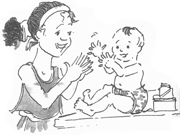
On the day they are born, children have this remarkable built-in alarm system: when they feel discomfort they tell us. They express their need or anxiety by grunting, squirming or yelling, and from Day One we are already making and testing hypotheses about what might be the trouble: Maybe she’s too hot ? ... No ... Maybe she’s hungry? ... No ... and so on.
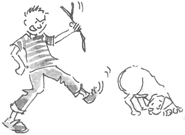
The other thing children do automatically is that when we don’t trouble-shoot accurately, they increase the intensity of their discomfort alarm: it gets louder, more urgent ... or they throw something.
The children and youth we work with have mostly not been heard when they have expressed needs. And like the more desperate infant who throws things, their way of drawing attention to their distress is more symbolic than direct. They throw things. We hear these descriptors: delinquents, anti-social youth, troubled kids, behaviorally disordered students, emotionally disturbed children ...
Our task is once again to make and test some hypotheses about these exaggerated ways of expressing needs which have developed: Maybe he is feeling excluded ... No ... Maybe he is frightened ... No ... We try to decode the scrambled message in order to meet the need being expressed so that the youth can come to trust his ability to communicate his anxieties and angers to others.
We might hear one youth from across a yawning chasm of separation and despair – almost out of reach
Another may attack us and refuse our attentions – in the hope that we will persist
Yet another may be tapping from the inside of a cupboard door ... and we tap gently back
The responsive dialogue we set up with him can be the forerunner of more prosocial and verbal ways of expressing himself and relating to others.
The simple lesson from all this: There is an urgency – If we fail to "hear" today, the youth’s messages tomorrow will be even more noisy or oblique, harder to hear, and the situations he creates less containable or repairable. Listen today.


