



































The complete set of 198 Hints are available in paperback from the CYC-Net Press store.



 Listen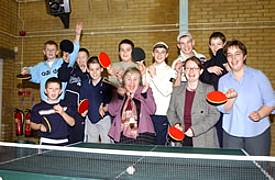
For a whole lot of reasons we child and youth workers are in danger of becoming doorkeepers. We make close arrangements (rules?) about where children should be, for what reasons, at what times; there are other arrangements (rules) about where they should not be, whom they should not see, what they should not do. We have been known to keep them away from "unsuitable" family members, friends, places and activities. It is true that in these times of increased threat we do have a responsibility for keeping young people safe and protected. But not over-protected. I have seen competent adolescents reduced to contrived inadequacy by arbitrary, controlling rules. Tragically, they are heard to ask questions like "Are we allowed to sit here? Is it OK for us to go to the shop on the corner? Do we need permission to phone our mum?"
Particularly for children and youth in care, we must more actively open doors for them, and link them more healthily with themselves, their interests, self-knowledge and skills; with their families and neighbourhoods and social realities; with the wider world, its services, opportunities and attractions; and particularly with the groupings which will give them life-long membership benefits, wherever they go – for example, to sports clubs, civic amenities, social centres, churches, special interest societies ...
In our practice today we remember that the young people alongside us will one day (in two years, five, ten, twenty years) be members of a family, a community, a society, and their fulfilment and happiness will depend on their ability to connect with others, interact with others, belong with others. The more activities, social opportunities, transportable skills and general street smarts we expose them to and introduce them to now, the more securely they will be networked and connected as they grow up.
In our program they may be safer, and our lives will be easier. But just imagine if the unconfident and awkward kid alongside you now, in ten years’ time will have discovered that he has some potential skill in table-tennis1 and that most neighbourhoods have a table tennis table in some local hall, where others who enjoy the game gather and enjoy the game and each others’ time together. And think of the value-added personal and social benefits which would have accrued.
Just because we found a door to open.
Note
1. For ‘table-tennis’ substitute any one of the
two-hundred-and-sixty-three alternative activities, interests or pursuits
you might think of to ‘fit’ with the kid who is standing next to you now.


