



































The complete set of 198 Hints are available in paperback from the CYC-Net Press store.
 Listen
 Holiday camp or intensive development?
"What do you think this is – Billy Butlin’s Holiday
Camp?" I heard Max Fletcher ask.
"What’s Billy Whatsisname’s Holiday Camp?" asked one of the kids.
"If it still exists, it’s a place where families go for their holidays, and
where there is wall-to-wall entertainment laid on for 24 hours a day,"
replied Max.
"Sounds cool," said one. "Yeah!" yelled another, "Bring on Billy!"
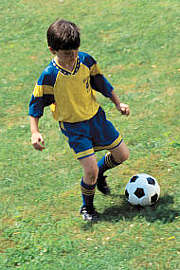
Residential programs usually have a range of activities and entertainments on call, many of them on the campus, others attractions in the community, whether the bowling alley, the river or the beach, the hockey stadium, or just the local Burger Ranch. Some people worry that we "entertain" the kids too much, and Board members may raise eyebrows at the cash claims for ball park tickets or ice-creams at the beach.
There are two things here.
One is that kids in residential programs have often been deprived of opportunities for good old-fashioned child development – physical, cognitive, emotional, social, cultural ... you name it. In one sense we are lucky when we have activities resources on our campuses and in our neighbourhoods: hoops and basketballs, trees to climb, swimming holes, books to read, TV sets. These things are rich in their capacity to stimulate, to challenge, to offer chances for competition and achievement – and for simple no-need-to-apologise-for fun. Thank God that such activities draw kids out of themselves, draw them together, allow them to touch and become familiar with the things that all kids know. And the community facilities are one step better: they are the sporting and entertainment facilities which they will find in their towns throughout life, and they learn how to use them, to benefit from them, to enjoy them. One day they will share with their own families the excitement of the ball game, the geselligheid* of the steakhouse.
The second thing is that we monitor the
developmental effectiveness of the entertainment and activity program.
We are careful to note when the activities program promotes only passive
enjoyment, when it feeds an infantile need gratification, when it is a
repetitive (or the only) source of stimulation, and our young client is not
moving beyond this. The activity and entertainment program is now a
negative, and the young person is not the protagonist in his or her own
life. The insight and skill of the Child and Youth Care worker is now called
into play. How do we extend the value of this aspect of our work? Do we ask
the youth to teach some aspect of the game? Do we ask them take the
responsibility for running an activity? Do we delegate to them the
charge of the hamburger brigade tonight? Do we invite them to
participate with the staff in the planning of the program, sharing
with them our thinking about the way in which individual kids might benefit?
Or do we realise that we still have much deeper work to do with this young
person? That he or she remains very vulnerable to stimulation, too dependent
on external control and influence, short on muscle when it comes to
self-determination, independent decision-making?
* An untranslatable South African word meaning conversationally comfortable,
sociable togetherness


