



































The complete set of 198 Hints are available in paperback from the CYC-Net Press store.


 Listen
 Words, body language – and thoughts
Everything we say and do in the company of kids is communication. We are not let off the hook (when we have been dismissive, discouraging or rejecting) by protesting "I didn't say a word!" The way we stand, the expression on our face – and even the thoughts in our head – may have "said" more than we expected.
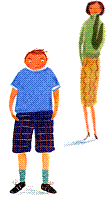
A common example in our work is the persistent, attention-getting, clingy kid who tends to raise the same questions over and over. It is easy for us to become irritated by the repetitive cycles which don't get resolved and move on – and we show it. Even as the youngster approaches us, we may let our shoulders drop, our mouth tightens, perhaps we sigh. These actions translate easily into "Not again!" or worse, "Not you again!"
Two things.
In our difficult encounters with young people, we can give too much freedom to our thoughts. We just have to think frustration and impatience for these attitudes to show in our body language. And needy kids have a ready facility for "reading" these thoughts – even, when we get into a habit of responding impatiently to a specific youngster, for anticipating them.
When we find our body language or mental attitude presenting as abrupt or distancing, we are probably avoiding or denying some responsibility of our own. We are, perhaps, failing to follow up a task in relation to this kid – to engage with the family, to spend time listening to the child, or even to raise our own reactions in supervision.
In our practice today, maintaining a good level of self-awareness on our own part, makes us more open to facing professionally some unfinished business relating to the kids and their families. When we don’t read the signs for ourselves, expect our clients to read them for us – not only in what we say or don’t say, but also in our body language, and in our very thoughts.


