



































The complete set of 198 Hints are available in paperback from the CYC-Net Press store.
 Listen
 Making activities real
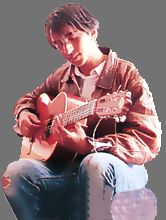
Rick was sixteen and didn’t have an awful lot going for him. He often compensated for this by "fiddling" – disassembling and reassembling, toys, bicycles and things. One day Susan, a staff member, heard him singing, and introduced an old guitar into the discussion, showing Rick how to string it and tune it. The guitar kept the boy occupied, and Susan would often lie back in the sun alongside and remark: "That was nice," or place one of his fingers on a different fret to introduce a new chord. But for some months it looked as though Rick would remain in his circular "fiddling" behavior.
In our program we usually marked Sunday evenings with an informal "hymn sandwich". Unexpectedly one Sunday Rick asked whether he might sing a song that evening in chapel – which would be in front of eighty people, youngsters and adults. With only the slightest hesitation, we agreed. When the time came he stood up, and accompanying himself unselfconsciously with simple chords on the guitar, he sang a song which he had written about his own childhood – with the haunting refrain, "Didn’t anybody see, didn’t anybody see?" Nobody was left unmoved.
It was to prove a turning point for Rick. His fiddling had been building some inner skill and confidence, and now became grounded in a transitive rather than an autistic action.
* * *
There is nothing wrong with activities for their own sake. And, especially with special kids, there is nothing unusual about 16-year-olds doing one-year-old work. Indeed, Susan, the care worker, recognized this in Rick and responded patiently and accurately. Our task is to introduce not hurry but direction into activities, so that they lead eventually into a social context, as does all development, that their meaning can be shared.
So whittling wood can move into carving or restoring furniture; bouncing a ball against the wall can move into tennis or team games; listening to music on a headset can move into parties or concerts ...
We think about this as we "do" activities in our program. We make room for kids to do their "internal" learning, however "late" this may be, but our presence, our noticing, our waiting, draws it into the human discourse, so that one day it may be not just "fiddling", but part of the complex, negotiable language of sharing.


